

Whānau, whakapapa, mahi inspire te reo learners

“Te reo Māori classes at WITT are suitable for a wide range of learners — whether you want to connect with whānau and whakapapa, build confidence using te reo in your workplace or business, or simply begin your reo journey,” says Bernie Edwards.
Bernie ((Ngāti Ruanui, Waikato-Tainui, Ngāpuhi, Ngāti Whātua) is a te reo Māori Kaiako (tutor) at WITT within the School of Māori Enterprise, Business and Technology.
Alongside teaching his own classes, he also supports kaimahi (staff) across WITT with te reo Māori and tikanga and works alongside staff to support their ākonga (students) where reo, tikanga or Māori kaupapa are part of the learning.
Q&A with Bernie:
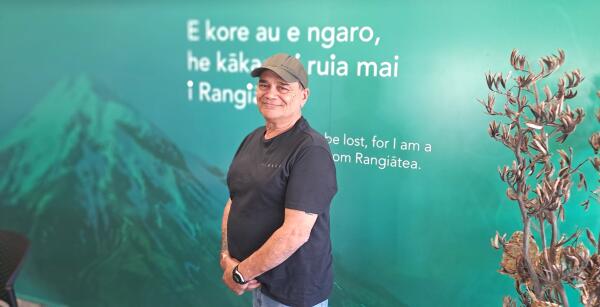
What’s it like for ākonga learning te reo at WITT?
Classes are face-to-face, practical and supportive. Morning and evening class options are available, making it easier to fit learning around work and other commitments.
The focus is on giving learners the tools to construct and use te reo in everyday situations. Learners are also introduced to mihi, karakia and waiata in context, for example as part of the pōwhiri process, giving them a deeper understanding of how te reo Māori connects with tikanga and Te Ao Māori.”
What’s motivating students to learn te reo?
A mix of reasons. Some want to connect more with whānau and whakapapa, some want to use te reo in their workplace, and some have wanted to learn for a long time and are finally giving it a go. This year we also have non-Māori grandparents learning te reo because their daughter has married a Māori tāne and they want to connect and kōrero with their Māori grandchildren.
Who are the learners?
A real mix — different ages and backgrounds, working people, parents, students and older learners. We also have people from businesses and workplaces around New Plymouth who want to build confidence using te reo in their mahi.
What feedback do you get from learners?
Learners enjoy being able to actually use the reo rather than just memorise words. They are given the tools to construct their own sentences, and as they begin recognising patterns and having small conversations, their confidence grows.
If online learning is not your thing?
There are many more options now — online learning, apps, iwi programmes and community classes. At WITT, face-to-face learning with a tutor and flexible class options still seems to be popular, especially for people fitting learning around busy lifestyles.
Why do you believe more people should learn te reo?
Te reo is part of who we are here in Aotearoa. Even learning a little can help people feel more confident using names, greetings and everyday language in a respectful way. Every person who learns and uses te reo contributes to its revitalisation and ongoing strength — even if it’s simply saying 'kia ora' each day or using kupu Māori where they can.
What’s your favourite whakataukī?
Kāore te toka e haere ki te pāua.
The rock does not go to the pāua.
For me, this speaks to taking action and seeking out what you want. If you want to learn te reo Māori, you have to go towards it — it won’t simply come to you.
Programme info:
Bernie teaches Te Pokaitahi Reo | New Zealand Certificate in Te Reo (Level One)
Enrolments for 2027 are open now.