

Horses, hills, heading dogs – farm dreams get real
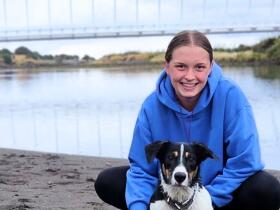
She grew up a townie in New Plymouth, but former WITT student Milla Rasmussen is living her dream far from her urban roots.
Sheep drenching, docking, dagging, and shearing as well as mustering on horseback with heading dogs she’s trained herself are among skills she’s learned at Otiwhiti School of Agriculture (near Hunterville) – a specialist farm cadet training scheme.
Milla, 18, discovered farming was her thing as high school student attending WITT’s Trades Academy Agriculture course in 2024. She signed up for the Secondary Tertiary Pathways programme every Friday. “I hated school, so it was something I looked forward to at the end of each week.”
An animal lover since she was little, Milla she rode horses in her teens and did the occasional milking gig.
“I enjoyed coming to WITT – I learnt a lot because I wasn’t from a farm, so it was great chucking my gumboots on and getting into the farming side.”
She made friends with others who shared her passion and found her sense of direction.
With encouragement and support from her tutors, “WITT gave me that boost to get into Otiwhiti – they could see that I was keen.”
Otiwhiti – hands-on learning
Total immersion at Otiwhiti sheep and beef station in 2025 has been life-changing, and the list of skills, experiences and knowledge she’s acquired in just one year is impressive.
Along with 17 other cadets she’s had plenty of hands-on learning in surrounding farms as well as time in a classroom for theory. Situated in rugged hills in the Rangitikei region, Otiwhiti cadets live in on-site accommodation, affectionately named The Hood.
Growing up an only child, Milla has appreciated the close camaraderie of her classmates (10 girls, 8 guys), who she knows will be lifelong mates.
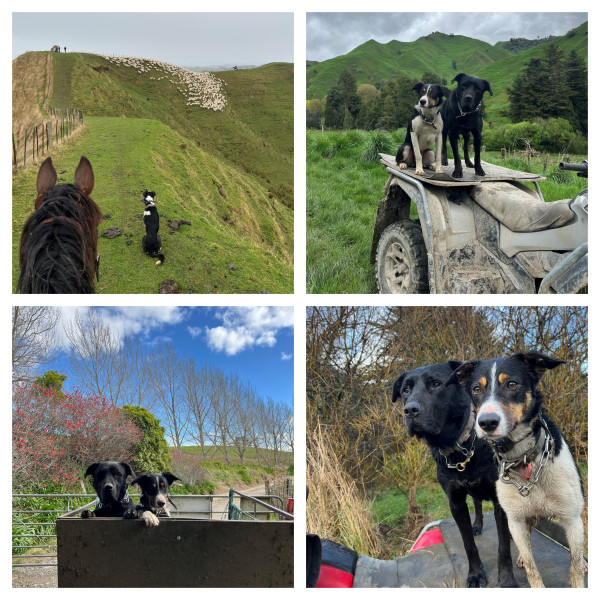
One of her favourite experiences has been training a heading dog, Duke. She bought him to take to Otiwhiti at the start of the year as a six-month-old puppy to begin training. She’s taught him to listen and respond to her. He can circle sheep on command, working in tandem with her other dog, Pango.
Farming is a daily encounter with life and death. She’s learned how to help ewes during lambing. It’s not so daunting, “unless you have to push the lamb back in if the head is coming out first. The front legs need to come first – almost like it’s a superman!”
A new skill for Milla is how to kill house muttons (mature ewes) and prepare them for eating. “I also learnt how to kill and cut up a sheep for dog tucker. Nothing goes to waste as the farm dogs get the offal that we cook for them."
She’s also mastered docking tails and dagging or crutching (remove wool from around the back legs and rear) to prevent flies from laying eggs in the matted wool, which can lead to flystrike, a painful and potentially fatal condition where maggots burrow into the sheep's flesh. Then there’s drenching, vaccinating and feeding as part of the animal health and welfare component of the course. Safe use of quad bikes, tractors, chainsaws and building fences are also included, as well as learning about soil science and pasture.
“I came to Otiwhiti calling it dirt – it’s not dirt, its soil. There’s a lot to learn – not just the colour but the worms and bugs that live in it, how it crumbles in your hand,” Milla explains. “It’s the foundation to farming, to growing quality pasture. You need good soil to make enough grass to feed your stock. If you can’t do that then you’re not much of a farmer.”
High country, high life
Dogs are big part of her love of farming – “I probably wouldn’t be into farming if it wasn’t for them. I love dogs, always have. Now I’m working with them. Farming wouldn’t be farming without dogs for me.”
While farming these days can be high-tech with apps to monitor animal health, electronic fencing and pasture status, Milla likes that day-to-day farming is mostly device-free, often because there’s no internet service in remote hill country.
“You go to work, and you’ve got the paddock, the sheep, the fences and the dogs. “
“You can’t be on your phone – you need to concentrate. It’s nice when you’re cruising along on the motorbike and you can just hear the bike, and the birds and the sheep eating and the cows calling to their calves, the ewes calling to their lambs.”
While the long hours can be physically hard and tough on the body (you need good sleep) it’s “very rewarding,” she says.
Her tutor Adrian Edser says Milla demonstrated outstanding dedication and capability throughout her Trades Academy agriculture course. “Her strong practical skills, keen interest in modern farming practices, and consistent high achievement set her apart as an exceptional student. She approached every task with maturity and enthusiasm. Milla’s performance reflects genuine passion for the agricultural sector and indicates a promising future in the farming industry.”
Adrian reckons agriculture is a great option for young people because it offers practical, future-focused skills in an essential global industry with growing demand for skilled professionals. “It combines hands-on learning with science, technology, and problem-solving, preparing students for a wide range of careers that support food production, environmental stewardship, and sustainable farming.”
For Milla, this high-level summary translates into her idea of paradise - riding steep hill country on a horse with a flock of sheep and her dogs. She hopes to find a junior shepherd job role and ultimately become a stock manager.
For more information on studying agriculture at WITT: