

Health impacts highlighted in smokefree roadshow
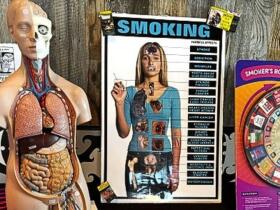
Who would want to put toilet cleaning and fly spray products into their body? Behind the fruity, confectionary flavours, that’s what you do when vaping, says the creator of smokefree science roadshow, Te Mana o te Hā, which opens at the WITT this weekend.
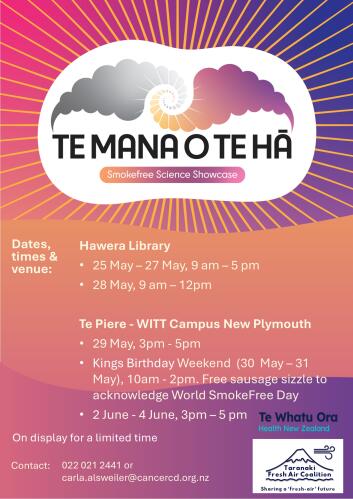
The Fresh Air Coalition (FACT) has partnered with WITT (Te Kura Matatini o Taranaki | Western Institute of Technology at Taranaki) to present Te Mana o te Hā – an interactive hands-on science showcase that casts new light on the reality and risks of smoking and vaping. It invites visitors, particularly youth, to explore how to break this cycle of addiction and prevent a new nicotine-based pandemic.
FACT is made up of two Southern Iwi - Ngāti Ruanui ko Ngāruahine, Cancer Society, National Public Health Service | Te Whatu Ora, and Hapai Te Hauora.
Dunedin-based creator and researcher Dr Craig Grant – who spearheads the show - says interactive displays – including inflatable pigs lungs - are more effective than pamphlets and talks as they offer a tangible way for youth to engage with learning about impacts of smoking and vaping.
He will be welcoming school groups who are visiting the show this Friday.
Te Mana o Te Hā (Honouring our Breath) was originally envisioned as a smokefree showcase aligning with Smokefree 2025, Dr Grant says. However, with the emergence of vaping as a concern and the repealing of the Smokefree legislation, its scope expanded to include the role and impacts of vaping and encompass a broader focus on creating nicotine-free futures.
“The showcase is designed to engage youth and provide them with science-based insights into smoked (cigarettes) and aerosolised (vaped) nicotine products, to enable them to make informed decisions about the risks and impacts of smoking and vaping,” he says.
Since 2024 the roadshow has attracted over 35,000 people, including schools, kura, marae, museums, festivals, and community hubs spanning from Northland to Bluff.
“It’s been very well received, with evaluations showing >70% of attendees report they would be less likely to try vaping and encourage others to stop smoking or vaping,” Dr Grant adds.
Key themes in the showcase include Hidden Harm. This module starts with a depiction of the vast range of chemicals – such as some used in insecticides, toilet cleaners and fly sprays - within cigarettes and vapes and demonstrates their risks using props and real objects. A video animation shows how nicotine influences neurodevelopment and its addictiveness is demonstrated using a steel nicotine molecule to attract magnetised imagery of money, time, etc. The use of flavours to mask its taste and attract new users is also revealed.
Other displays are Nicotine is Not Our Whakapapa and Nicotine Nostalgia – designed to convey the impacts nicotine use has had globally, particularly on Indigenous peoples. “The imagery instils an appreciation that cigarettes and vapes are not somehow a Kiwi or Pasifika ‘thing’, but rather reflect an unfortunate colonial and commercial legacy,” he says.
In Pipe dreams spectators find a side-by-side comparison of decades old cigarette ads alongside contemporary vape ads which Dr Grant says “graphically demonstrates the insidious advertising tactics deployed by the nicotine industry. The display helps rangatahi to understand the role of design and influencers in forging perceptions and better equip them to objectively evaluate the authenticity behind the industry’s claims and slick marketing.”
A range of hands-on interactive displays includes:
· Smoker's Roulette - Answer smoking harm-related questions, spin a roulette wheel, and learn what tobacco-triggered disease you might get.
· Smoker’s Body - Explore how all parts of our anatomy are impacted by smoking.
· Gross Mouth — Get up close to oral health ailments from smoking and vaping, annotated with images and information from the Dunedin Longitudinal Study.
· Smoker's Lungs — A set of inflatable pig lungs, one of which is treated with carbon microparticles to replicate the impact of heavy smoking, starkly demonstrate the difference between a healthy and compromised lung.
· Smokerface — A tablet-based app enables visitors to take selfies and then see how the premature aging smoking causes might affect them directly.
The event also offers information and support on where to go for help with quitting smoking and vaping.
While some of the displays will be confronting, Dr Grant believes the roadshow provides a chance for youth to look ‘under the bonnet’ of what’s happening inside their bodies as they vape or smoke, so that they don’t become “inadvertent guinea pigs of the nicotine industry.”
Many young people love to play sport, so he feels it is imperative they understand the damage to lungs from vaping and smoking, which undermines sporting fitness.
Helen Lelean, Head of Nursing at WITT, says “the roadshow is a unique opportunity for our youth and the wider community to learn more and fully understand the damaging effects of smoking and vaping. It’s a real concern when we see young people – even adolescents – taking up vaping without realising how they are compromising their health and wellbeing. The interactive modules offer a graphic and effective way to get the message across.”
The roadshow coincides with the World Health Organization’s World No Tobacco Day (31 May).
Te Mana o te Hā – at WITT campus: Te Piere
- Opens 29 May: 9am to 5pm
- King’s Birthday Weekend (30-31 May): 10am – 2pm.
- 2-4 June: 9am-5pm
- 5 June: 9am – 12pm