

Extra intake for trauma course as interest grows
A growing awareness of the impact of trauma has led to an additional intake this year for a unique, Taranaki-based Trauma Informed Practice micro credential at WITT.
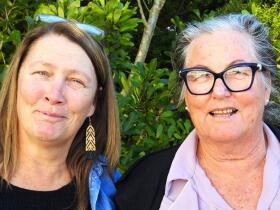
Tara Malone and Helen Bingham, researchers and nursing tutors at the Western Institute of Technology at Taranaki (WITT), offer the only tertiary-based qualification in Trauma Informed Practice in Aotearoa. The next eight-week course starts September 21.
The impact of trauma experiences can affect holistic wellbeing yet often goes unrecognised. In this light, understanding the potential impact of life-changing trauma experiences should be essential for all professionals working in the health, education, justice and social sectors, say Tara and Helen.
They’ve been teaching the micro credential for five years and are respected experts and conference speakers because of their work on the topic. Their focus is how trauma events - including historical, intergenerational, developmental, emotional, physical and sexual - disrupts development, behaviour, and wellbeing. Research shows that early trauma can lead to a raft of adult problems, including addiction, self-harm, poor educational outcomes, heart disease, type 2 diabetes and more.
“Knowledge of trauma’s impact can bring a profound shift and lead to a deeper, more compassionate understanding of a person's needs. And it's key to identifying approaches to healing and recovery that really work for that individual and their whānau,” Helen says.
Chinju Baby, who did the course and also studied to be an Enrolled Nurse at WITT says; “The Trauma Informed Care micro credential has helped me develop a deeper understanding of patients with trauma backgrounds and recognise how their experiences can influence their thoughts, feelings, and behaviours.”
“As an Enrolled Nurse, I apply these principles by providing care without judgement, showing respect, building trust, and supporting patients with compassion and dignity.”
Call for trauma awareness across education sector
New research that Helen and Tara are currently working on sets out to measure the effectiveness of trauma-informed practice professional development on the attitudes of WITT’s own teaching and support staff, who took part in two half-day professional development workshops earlier this year.
They were keen to do research at their own workplace in the interests of creating awareness of the impact of trauma in the wider population. They hope the workshops could be a potential model for tertiary education nation-wide and believe having trauma-informed staff would be advantageous for student success.
“Some awesome trauma-informed mahi is evident in some early childhood, primary and secondary education settings,” says Tara. “It's great to have the support of the leadership team here at WITT to do something in the tertiary sector.”
Their first research project (published in Kaitiaki Nursing Research in November 2024) measured the effectiveness of an eight-week trauma-informed care credentialled course on the attitudes of nursing students towards being trauma-informed in their practice and found positive results for both client and carer.
The micro credential has attracted participants from a range of professions and services across the motu. “We’ve had police, people from the justice system, education, physiotherapists, and other professionals are coming, because once you understand what’s happening in somebody’s brain you can then make some choices about how you’re going to work with them,” Tara explains.
For more information and to enrol:
Caption: Tara Malone and Helen Bingham - WITT tutors who teach the Trauma Informed Practice micro credential.