

Counting cats - WITT students detect threat to native species
Wild cats cause immeasurable damage to our native environments. Recent findings by WITT conservation students at a local reserve have alarm bells ringing.
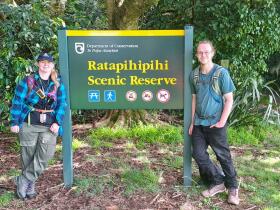
Rātāpihipihi Scenic Reserve is a small remnant subtropical forest with a variety of native vegetation like nīkau, kohekohe, pukatea, rewarewa, titoki, pūriri and tawa. There is a small scenic waterfall from the Mangaotuku Stream, bridges and plentiful wildlife, including birds like kererū, tūī, pīwakawaka, and some of our more sensitive species like gold-stripe gecko and freshwater koura (crayfish).
WITT has a community agreement with DOC [Department of Conservation] at Rātāpihipihi Scenic Reserve, to carry out monitoring and trapping as part of its programme of study, says WITT conservation tutor Georgina Ngametua.
Students have been monitoring and trapping pests in this reserve since late 2022 and over this period have detected all the main target pest species, including ferrets, stoats, weasels, cats, possums, and rats.
This year, monitoring efforts at Rātāpihipihi Scenic Reserve have recorded higher cat and kitten numbers than ever before.
Cat numbers ‘concerning’
“The high number of cats seen on both trail cameras and tracking tunnels is really concerning”, Georgina says. “Monitoring experts at DOC were consulted around the unusually high number of cats found in the tracking tunnels, and it was made clear that our findings were staggering.”
In 2025 feral cats were officially added to the target species list by Predator Free NZ - target species for this policy.
“Most of the cats captured on camera in the reserve are thought to be stray or feral, having probably been dumped as kittens,” says Georgina. “Though the reserve sits right on the borderline between urban and rural zones, the nearest residential house is quite some way away.”
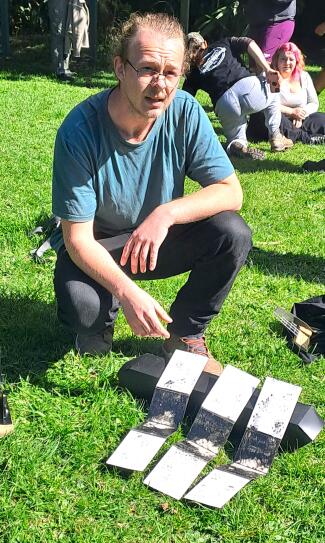 Caption: Student Mitchell Snowdown with inked cat paw tracks collected from a tracking tunnel.
Cat-egories
Cats in New Zealand are thought to fit into three categories:
· Feral (roaming independently of human support)
· Stray (partly wild with some human feeding support)
· Domestic (living with humans but free to roam outside the boundaries of owner’s property).
“I consider any cat that is not homed a ‘wild’ cat,” says Georgina. “These cats didn’t ask to be out there. They are uncared for and unfortunately pose a huge threat to conservation efforts and our precious native taonga.”
She says it is important to understand the full scope of this issue, including the health status of a typical cat living in the wild.
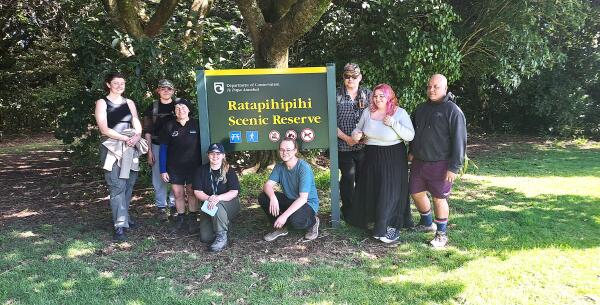
WITT conservation students (pictured above) have been given opportunities to attend DOC-led dissections of pests, including cats. They have found feral and stray cats to be heavily infected with tape worms and with severely diseased organs.
“They are often emaciated and have a challenging existence in the wild,” says Conservation student Mitchell Snowdon, who is enrolled in the New Zealand Certificate in Conservation Operations (Level 4).
Cats also pose additional threat to wildlife as carriers of the contagious toxoplasmosis parasite. This is spread when parasite eggs from cat faeces wash into the ocean and can kill Hector’s and Māui dolphins.
What can be done?
As part of their training WITT conservation and pest operations students collaborate with a range of local organisations to help keep predator numbers down in parks and reserves around the region.
WITT students are guided by national-mandated policies and guidelines, such as DOC’s Predator Free 2050 strategy.
“Following these important guidelines is critical to ensuring they respect the animals they trap by using humane methods and take reasonable steps to prevent domestic cats from getting trapped, all while protecting Aotearoa’s vulnerable native species,” Georgina explains. This means, for example, placing cat traps at least 200m away from homes.
For information on how you can help be a responsible cat owner, check out websites like Predator Free NZ.
Want to learn more? WITT offers three programmes for anyone interested in conservation:
· New Zealand Certificate in Pest Operations (Level 3)
· New Zealand Certificate in Conservation (Operations) (Level 4)
· New Zealand Diploma in Environmental Management (Level 5) with strand in Conservation (Operations)