

Celebrating Te Wiki o Te Reo Māori at WITT

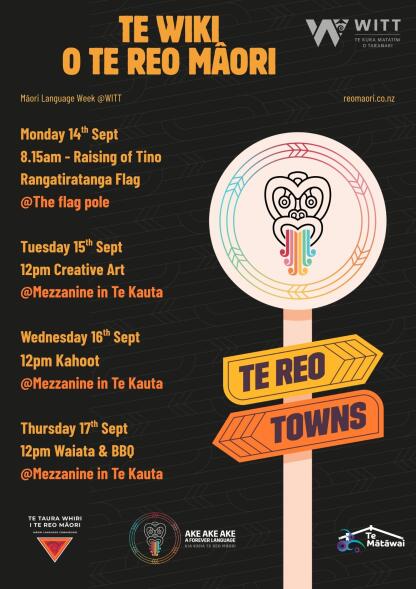
WITT ākonga and kaimahi are celebrating Te Wiki o Te Reo Māori (14 – 20 September) with a full kete of activities, including indigenous crafts, quizzes, kai, karakia and raising the Tino Rangatiratanga flag on campus.
New staff member Viv Campbell (Ngāti Ruanui, Taranaki, Te Atiawa) - Kaitakawaenga/Pastoral Support – says she’s pleased to note the use of te reo on the WITT campus is normal at any time.
“Being on the campus for the past six weeks has been awesome - there’s a culture where you walk past ākonga or tutors and say ‘kia ora’ or ‘mōrena’ and everyone responds in Te Reo Māori, so it’s a normalised thing, not just a week of celebrating thing,” she told The MOST FM last week in an interview about WITT’s plans for Te Wiki o Te Reo Māori.
Viv (with the support of her team) has been planning lunchtime activities for ākonga for this week including creating art with Māori-designed stencils on Tuesday, the popular Kahoot online, interactive quiz app on Wednesday, waiata and sharing kai on Thursday.
This week anyone who orders their kawhe in Te Reo Māori at WITT’s Te Kāuta and Garage cafes will receive a chocolate fish. Tutors are being encouraged to start their week’s classes with karakia, though some already do.
“Karakia is broader, deeper and wider than just words. Students get to experience this”, Viv says. “It’s for everyone – we’re about community and people. Te Reo Māori is to be embraced. It’s a beautiful language.”
More than kupu…
Viv calls herself “still having a lot to learn” in her journey of Te Reo Māori. “I’ve got so much to learn but I love learning, and I love it when others jump on board and learn.”
She sees the uptake of learning te reo growing every year as “people become more comfortable, more fluent and it becomes normal to speak it, which is exciting.”
She thinks back to the pivotal event underpinning this week. On 14 September 1972, a petition with over 30,000 signatures from Ngā Tamatoa, Victoria University's Te Reo Māori Society, and the New Zealand Māori Students Association was handed over on the steps of Parliament. Māori became an official language of New Zealand in 1987.
Te Ture mō Te Reo Māori 2016 | The Māori Language Act 2016 created a partnership between iwi and Māori and the Crown to promote the knowledge and use of te reo Māori. In 2016 the Act replaced the Māori Language Act 1987. Every year since 1975, Aotearoa celebrates Te Wiki o te Reo Māori with a different theme each year.
Learning Te Reo Māori can be deeply transformative, says Viv. “It’s not only about the language and speaking – it’s about embracing a culture. It’s a key thing and I think once people experience some sort of Kaupapa, as part of the language, you get to experience something beautiful. It’s more than just saying kupu, more than words.”
Te reo Māori classes at WITT in 2027 – expressions of interest/enrolments open now.