

WITT celebrates neurodiversity in global awareness week
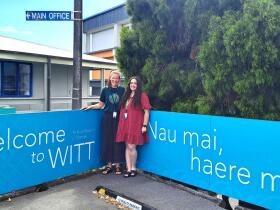
People’s brains are wired differently and in an educational setting this can present challenges for some learners. WITT’s student success team says vocational education is at the frontline when it comes to supporting neurodiverse learners.
Neurodiversity Celebration Week (March 16-20) – a global event – will be in full swing at WITT with events designed to celebrate different ways of thinking, learning and communicating.
Kaimahi from WITT’s Student Success Team say the week is about helping people better understand neurodiversity and creating more inclusive learning environments as well as reducing stigma.
Accessibility Coordinator Jo Hagele says neurodiversity recognises that everyone’s brain works differently and that there isn’t just one ‘normal’ way for a brain to work.
“People might be autistic, have ADHD (Attention-Deficit/Hyperactivity Disorder) or dyslexia, but these differences are a natural part of human diversity.”
Youth Mental Health Support Worker Sidney Hoogendijk says the conversation around neurodiversity has shifted in recent years.
“For a long time, the focus was on what people struggled with,” she says. “Now we’re also recognising strengths of being neurodiverse — things like creativity, problem-solving, deep focus on interests, or noticing details that others might miss.”
“When people understand neurodiversity, they’re more open to different ways of learning and communicating. It helps shift the focus from ‘fitting in’ or ‘fixing’ people to creating inclusive environments where everyone can contribute and thrive,” she says.
At WITT, the Student Success Team works alongside students - including those who are neurodivergent to help them succeed in their studies. Support can include study skills guidance, learning support, assistive technology, or adjustments such as extra time for assessments. The key is tailoring support to each individual student.
Everyone learns differently
“Everyone learns differently. Our goal is to remove barriers so students can focus on learning and doing well in their courses,” Sidney says.
Creating a welcoming space where students feel comfortable asking for support is also important. “Asking for help is actually a really positive step. It shows students are taking ownership of their learning.”
The team says inclusive practices for tutors — like clear instructions, flexible learning approaches and different ways of presenting information — benefit all students, not just those who are neurodivergent.
To mark Neurodiversity Celebration Week, WITT will host a series of fun activities on campus including a scavenger hunt, quizzes, games, arts and crafts, a BBQ, prizes, and a texture and taste session to focus on sensory connections. All students are welcome.
According to the Neurodiversity Week Celebration website approximately 15-20 per cent of the population has a neurological difference. “Instead of labelling people with deficits or disorders, when we use the term neurodiversity, we take a balanced view of an individual’s unique strengths and challenges. Many ‘challenges’ neurodivergent people face are more to do with the environment and systems they are placed in, often designed by a majority population.”
Background
Canadian-born Sidney moved to Aotearoa in 2022 and joined WITT a year ago. She has extensive experience in supporting neurodiverse learners. Sparked by her own experience of childhood struggles with autism and ADHD, she found clarity and direction following her diagnosis. She went on to gain a bachelor’s degree in psychology and two graduate certificates (one in mental health and addiction, and another in health and wellness coaching) and is a certified wellness coach. In New Zealand she completed a master’s in health science.
Read more about Sidney’s personal and professional background that led her to work with neurodiverse students.
Jo joined WITT last month. She is a trained Special Education teacher and has worked in the disability sector for 20 years, including in Germany (in a village for people with disabilities), the US (at a summer camp for young people with disabilities) and more recently in Wellington and Taranaki for Blind Low Vision NZ.
Check out the Neurodiversity Week website for more information and links to webinars and panel discussions: https://www.neurodiversityweek.com/
Caption: Jo Hagele and Sidney Hoogendijk are keen to see students take part in Neurodiversity Celebration Week activities and awareness raising.